
Working with Others
Working with Others
Awareness is key
Awareness is key
Awareness is key in helping you to identify the issue that is affecting your client and the possible solution. We need to observe the expressions of the client both in terms of their voice tonality and their body language. Observe your clients very closely. Clients will tell you all you need to know in the first few moments sharing their issue.
Watch out for;
- Hand or arm gestures; we often gesture to where we are feeling things in the body before we even say them.
- Voice tonality; a louder voice or sound angrier or more intense; voice breaking.
- Their whole body expressing what they are saying
- Changes in breath; are they holding their breath? Has it sped up or slowed down?
- Eye movements.
- Leg movements.
- Tension in the body; shoulders, arms, neck etc.
- Colour changes in the skin.
- Throwaway expressions
Watch where people point to with their arms; it can be a clue as to the nature of what it going on for them.
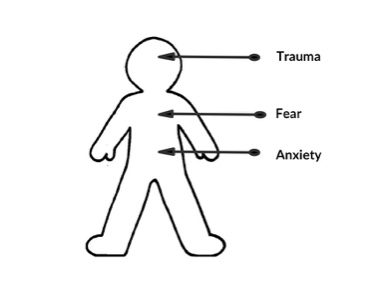
The Map is Not The Territory
The Map is Not The Territory
This is a phrase familiar to students of NLP. What it’s saying is that the map is simply a representation of a territory, not the territory itself. When our clients are communicating with us they are doing so using their map of their world. The territory is real to that person, we only make a map in our heads of what that person may or may not be thinking reacting based on our own experiences. Never presume that because you like or don’t like something they will. Their territory may well be very, very different from our map.
Why does this matter?
When working with your clients, you will need reflect their expressions, faces and the words they use. Use their language and match their posture and pace.
For example, if they say “I feel depressed” and bow their head, don’t respond saying “oh you are feeling sad” and lift your head and smile. By not reflecting them…
- You will lose rapport and connection with them
- The client will think that you’re not really listening to them
- The client will feel you don’t understand and will try explaining how they’re feeling again, and they might get lost in excessive detail
- It is annoying
The words the client uses is their tagging or labelling system that the subconscious uses. Using your tagging or labelling system (your language) is not going to connect to the part of the subconscious that is calling for the work.
No Story Required
It can be tempting to spend the first half of a session listening to the client sharing their challenges when in fact you don’t. The client will often provide you with what you need to know in the first few minutes of the session.
Working blindly with someone
It is possible to work “blind” and not even know what you’re working on with the client. Perhaps they have a delicate issue that they’d rather not share. The important thing to bear in mind here is you elicit a strong mind-body programme and that the client stays focused on the thing they want to work on. You can then use the mantras and simply use the word THIS;
This is a wonderful thing, I love experiencing this
I love other people experiencing this, I love people making me experience this.
Handling your clients when it comes to story
Given that very little or no story is required to work with your clients, it’s important for you to find ways to manage this with them. You need to strike a balance between them feeling like they’re being listened to and you having enough information to do the work. There is value in listening to more story than you need to obtain the language of the issue from your client. This is language you will be using back at them.
Depending on how you decide to market and run your sessions, there are several ways of handling this;
Provide a client intake questionnaire
Doing this help you to gather information about your client and what they want to work on in advance. By doing this, you’re able to start your clearance work very quickly in the session.
Let your clients know in advance about the lack of need for story
You can explain to your clients either personally as part of your first session, or through email or video in advance of a session that story is not required to do the work and that it takes up valuable clearance time.
Agree on a sign to use during a session
Agree with your client that you will hold up your hand or show time out sign with your hands (or something else) when they are getting distracted with their story so that you can get back to doing the clearance work that will move them forward.
Lighten up
When you are part way through clearing a serious issue and the client appears to be lightening up a bit, sometimes it can be appropriate to show the issue in a non-serious way. If they are to get over a serious issue then we would expect it to not be serious once it is treated. If they can laugh or smile at it they are then neutralising the problem with the opposite issue i.e. humour versus seriousness.
Now of course if someone has an issue with not being taken seriously then you would have to seriously be serious about the seriousness of their problem until you can seriously demolish the seriousness of the problem. Balancing it with its opposite; in fact the opposite of seriousness can be more of the problem than the seriousness of it. SERIOUSLY.
Digging Deep
We can use clearance work very effectively with emotions, feelings, behaviours and situations, but its true power is unleashed when you take it deeper and work on values.
For example, if a mother complains “I feel chaotic because my kids leave such a mess everywhere!” then we could work on both her feelings of chaos, as well as the trigger being that the kids leave a mess everywhere. But before jumping in, it’s worth digging a little deeper and exploring WHY those triggers are having the emotional impact that they are.
A good question to ask is
What is it about [the situation or behaviour] that makes you feel this way?
To which an answer might be “I like being organised and to feel like I’m in control. Seeing the mess makes me feel out of control.”
Here we can see that she values being organised and feeling in control. If we were to ask her what the opposite of either of those is she might very well say chaos. And we’re back to where we started!
Often the key to what we need to work on is in the first phrase that comes to mind; how we language our head trash. But the art of effective clearance comes from being able to interpret it and then work on the aspect that has the potential for the most impact. That being said, sometimes people need to move slowly through emotional work, so staying at the edges might be important before diving down into the nub of the problem. We must work in line with the pace that their subconscious is happy with.
In the example above, if we were to work on control and chaos (assuming they were her opposites) then not only would we probably not need to work on the trigger of the kids being messy, but we probably wouldn’t need to work on being organised either as this need for organisation probably comes from a need for control.
Resistance
Resistance to change is the biggest clue and giveaway you will need. We are often told that resistance is difficult to deal with in our clients, but it is simply another mind-body programme.
We can start by asking the client to hold the TAT position while experiencing the resistance. This helps to reduce the intensity of the resistance so that we can communicate with it.
For example, if the voice inside client’s head is shouting NO! to change, then
- Ask the client tune into the feeling and the mind-body programme
- Love it, acknowledge it and thank it (because it has a good intention)
- Ask the client to ask questions like;
- How can I help you?
- Why are your showing yourself?
- What have I got to learn from this?
- What message do you have for me?
Something will come into their mind, a new thought maybe. Often the intensity of the resistance drops too. Most often the resistance is a kind of protective thing, like resisting change because the status quo is better the devil you know, or perhaps the last time they did something different it was a bad experience.
Recognising Resistance
When you start doing work one this nature and using a powerful technique such as this, you will come across resistance in your clients. Resistance can take many forms so it’s important to understand how it may show up. Here are just a few ways that resistance may crop up for you and your clients;
They simply DO NOT want to work on doing any clearance
They literally have a block on doing any more clearance work and it doesn’t have to be consciously;
- You set them logical lists and they say they can’t do them “I can’t even think of 3 things let alone 30!”
- They don’t do any clearance homework that you’ve agreed with them.
- They cancel sessions.
- They experience anxiety in the lead up to sessions.
They self sabotage
Self-sabotage isn’t always a conscious thing and it may be that your clients attract life situations that are preventing them to do any clearance work. Perhaps something is coming to the surface in them that the subconscious is trying to protect or keep hidden. Self sabotage is another form of resistance and can show up in many forms too;
- They attract illness that prevents them from moving forward with the things they want.
- They attract people into their life who hold them back
- The people they already know start getting in their way somehow preventing them from moving forward. This can even be as simple as
- Environmental factors start interfering; noises outside stop them from writing their book; the dog keeps coming into their office and weeing on the carpet, people come
They turn on you
This is not always easy to handle, especially if you take it at face value instead of recognising it as resistance. They may start to hate you or fear you in some way. Perhaps criticising you.
How to handle resistance
Resistance is not to be feared. Start by clearing resistance and its opposite so that you don’t attract it yourself.
If you’re concerned that you’re facing resistance with your clients, test it and clear it in them if required.
Stay in close contact with your clients so that you can better spot it and take action if necessary.
Using Opposites
This is a great approach to use if you are doing something and it’s not working; try going the opposite way.
For example, Daphne comes for help “I am stuck. I do not know what I want in life”. Using coaching or friendship skills you coax Daphne as best as she can to talk of her loves and hobbies etc, but the result is that you just go round in circles and nothing is said with passion.
Why not stop and ask Daphne “What DON’T you want again in your life or at all in the future?”
A typical response might be “I don’t want XXX” e.g. being trapped in that controlling type of relationship, or demanding boss etc. So now we apply opposites again;
“Aha! So tell me more about having freedom in a relationship and what that would mean to you? How would that change your life for the better?“
“What type of boss would you be if not an angry one?”
Daphne now opens up. She expresses, she gives us throwaway lines and we have loads of opposites to RR and work with.
Of course, some people will be opposite and know exactly what they want but find it difficult getting there. So try asking them what they don’t want and whatever it is, clear it with because this is what is likely to be holding them back.
Remember opposites are like magnetic north and south poles; they attract each other. What we want will attract what we don’t want and vice versa. If the magnet is charged strong enough, we need to clear our polarities and get to a state of neutrality.
Track your progress
1 | Watch video: Working with Others | |
2 | Watch video: Awareness is key | |
3 | Watch video: The Map is Not The Territory | |
4 | Watch video: No Story Required | |
5 | Watch video: Lighten up | |
6 | Watch video: Digging Deep | |
7 | Watch video: Resistance | |
8 | Watch video: Using Opposites |
Your Notes